
An inventor, game designer, feminist, and Georgist. The inventor of The Landlord's Game, the precursor to Monopoly.
Elizabeth J. Magie was born in Macomb, Illinois, to an abolitionist family. In her 20s, she moved to the Washington, DC area, where she worked as a typist and a stenographer at the Dead Letter Office. She wrote short stories and poetry, performed on stage, and did comedic routines. In 1893, at 26, she patented her first invention for typewriting machines to make the paper move through the rollers more easily.
Magie was an active feminist, and as a single woman, her focus was the unavoidable dependency on men. She, as a stenographer, earned only $10 a week, which was not enough for her to support herself without a man. To bring attention to the matter, she bought an advertisement to auction herself as an American woman slave who needs a husband to own her. In this wording, Magie pointed out the status of women and black people in the country, indicating that the only free people are white men.
Another cause close to her heart was Georgism. Based on the anti-monopolist theories of politician and economist Henry George, Georgism is a single tax movement that advocated for the government to create a universal land tax based on the size, location, and usefulness of the land instead of taxing income. It also stated that services such as telegraphs, railroads, and utilities should be owned by the public rather than private companies. So the tax burden will be on the wealthy landlords instead of the laborers. These beliefs inspired her to create a board game that trains economic theories, and she invented the Landlord’s Game.
In 1904, 38 years old Magie got a patent for The Landlord’s Game. In its first version, the game could be played in two ways – a monopolist set up (named Monopoly) in which the goal was to own industries, create monopolies, and crush the opponents; and an anti-monopolist set up (named Prosperity) in which the goal was to build products and gain wealth through interaction and collaboration with the opponents. The game was innovative in various ways. It was the first to be played on a circular board when all game boards were linear. It was the first to encourage social and competitive interaction among the players, and as a tool of education, it taught the principles of economics to its players.
The Landlord’s Game had great successes among Magie’s friends, so she tried to sell it to the game manufacturing company the Parker Brother, which turned her down twice for being “too political.” In 1906, she moved to Chicago, where she co-founded The Economic Game Co to manufacture and distribute the game by herself. The patent on the game had expired in 1921, and other versions became popular in the Northeast and Mid-West, especially among college students at Columbia, Harvard, and the University of Pennsylvania, as well as among Quakers and middle-class families.
In 1933, three decades after Magie patented The Landlord’s Game, Parker Brothers released Monopoly, supposedly invented by a man named Charles Darrow. Based solely on the monopolist-capitalist aspects of Magie’s original game, this version became a household must, selling 20,000 sets a week in its first year, earning Darrow and Parker Brothers millions of dollars. In 1936, at the age of 70, Magie interviewed for The Washington Post and The Evening Star, criticized Darrow and its appropriation of her idea, saying that the game cost her more than she made from it, merely 500$.
Monopoly grew into the world’s most popular board game over the years, while Magie died without receiving any credit for her creation at 82.
In 1973, Ralph Anspach, an economics professor, was sued by The Parker Brothers after developing the Anti-Monopol game to shed light on monopolies’ dangers. In his research for the case, he discovered Magie’s story and the true origin of the game. 25 years after she passed away, she finally received her deserved recognition. Read more...

The first African-American woman billionaire in the US. A businesswoman, entrepreneur, and philanthropist. Co-founder of BET TV network, a managing partner, and governor of the WNBA's Washington Mystics.
Sheila Crump was born in Pennsylvania and grew up in Illinois. She found her love for music at an early age, becoming an accomplished violinist by 9. In 1970, at the age of 21, she received her B.A. in music performance and education from the University of Illinois and moved to Washington, DC, with her first husband, Robert Johnson. There, she worked as a violin instructor at a private school and gave private violin lessons to supplement her income. Within four years, her private lessens business grew, and when she had 100 students, she left her position at school and founded a youth orchestra called Young Strings in Action, which performed both in the US and abroad.
In 1980, Johnson and her husband founded Black Entertainment Television (BET), a cable network that approached African American viewers. She closed her music business and became the network’s community relations manager and the producer of teenagers’ talk shows. By the late 1990s, BET took a raunchy direction, and Johnson became concerned about its sexually explicit content and how it portrays and influences young women. In 1999, she began to pursue other business opportunities and sold BET to Viacom for an overall sum of $3 billion, making her, at the age of 53, the first black woman billionaire in the US.
In 2005, Johnson married William T. Newman, Jr. (divorcing her first husband three years earlier). She purchased a 350-acre estate in Middleburg, Virginia, and built the Salamander Inn & Spa, founding Salamander Hospitality LLC, a hotel resort and spa management firm. During this period, Johnson became the majority owner of the WNBA’s Washington Mystics, serving as its President and Managing Partner.
A woman of varied interests, Johnson is also involved in the film industry. Since 2008, she has produced numerous films, all with humanitarian messages – Kicking It, A Powerful Noise, She Is the Matador, The Other City, and the critically acclaimed film The Butler.
Throughout the years, Johnson spent much of her time and fortune on philanthropic work. She donated money to various institutes, including the United Negro College Fund, Howard University, and the Parsons School of Design. She founded the Sheila Crump Johnson Institute at the State University of New York to support the college community diversity and co-founded the WE Capital consortium to aid female-led enterprises. Johnson sits on the boards of many organizations; among them are the Americans for the Arts, the University of Illinois Foundation, the Curry School of Education, VH1’s Save the Music Foundation, and the Greater Washington Partnership. Read more...

Businesswoman, educator, and civil rights activist. The first woman in the US to found a bank and to serve as its president.
Maggie Lena Walker was born in Richmond, Virginia. Her mother was a former slave, and her biological father was Irish. After her stepfather had died, her mother worked as a laundress, and Walker helped her deliver clothes to their white clients. Then, she became aware of the differences between the quality of life of white and African-Americans.
As a teenager, she started volunteering at the local chapter of the Independent Order of St. Luke. An organization dedicated to empowering African-Americans socially and financially.
After graduating high school and being trained as a teacher, she taught at the Lancasterian School for three years. She had to leave her job after marrying Armstead Walker Jr. since the school’s policy prohibited employing married women.
Walker focused her time and efforts on raising her family and the Order, serving in several roles, and receiving more responsibility and leadership positions. At 31, she was appointed Grand Deputy Matron and established the Order’s Juvenile Branch, providing community services and education for its young members.
In 1899, at 35, Walker became the Order’s grand secretary – the highest administrative position in the organization, which she held for the rest of her life. She founded a community insurance company for women and the Order’s newspaper, St. Luke Herald, in 1902. She founded and served as the first president of the St. Luke Penny Savings Bank in 1903, becoming the first woman in the US to do so. By 1924, the bank served more than 50,000 members in 1,500 local chapters in Virginia, West Virginia, Massachusetts, and Maryland. Walker managed to protect the bank during the Great Depression, and by 1930 the bank integrated with all other African-American-owned banks in Richmond. It was renamed the Consolidated Bank and Trust Company, and Walker served as chairman of its board. In all of the Order’s business, Walker employed mainly African-Americans and promoted social change, educational opportunities, and economic empowerment with higher wages and job opportunities.
In addition to her work at the Order, Walker co-founded the Richmond Council of Colored Women and led various organizations, including the National Association of Colored Women (NACW), the Richmond chapter of the National Association for the Advancement of Colored People (NAACP), and the Virginia Industrial School for Girls.
She passed away at the age of 70. Read more...

The founder of the National Women’s History Museum (NWHM).
In 1982, Karen Staser was asked by her father-in-law to name five historical women who were famous for their own and not because of their husbands. Staser, who graduated from San Francisco State University with a Master’s Degree in Industrial/Organizational Psychology, could not think of merely five women. This occasion led her to 13 years of self-directed research about historic American women and their place in US history. While searching, reading, and studying, Staser learned that documented US history hardly included the stories of the women who shaped the county.
Relocating due to her husband’s new job in Washington, DC, in 1994, she noticed that there are different Smithsonian museums, but none devoted to women’s history and legacy. The realization that women were still invisible led her to take action and establish a museum in the nation’s capital that would be dedicated to the legacy of American women, showcasing their achievements and contributions to the country. Thus, In 1995 the National Women’s History Museum was founded.
In its first five years, Staser was the only full-time person working at the museum, serving as its first chair and president, and gathered strong women to join her on the board. NWHM’s first project was leading the campaign to relocate the Group Portrait Monument, honoring the women’s suffrage leaders, to the US Capitol Rotunda. After two years of struggle, they succeeded. The dedication ceremony occurred on Mother’s Day in 1997.
By the end of the 20th century, NWHM established a board and grew its staff. As the museum has worked towards establishing itself in a physical location on the National Mall, it continued to grow in other ways, including – a website with online exhibits, the annual National Women Making History Awards, national fundraising events, traveling exhibitions all over the US, and many more.
In 2000, Staser relocated to Alaska following her husband’s new assignment and resigned from NWHM. Read more...
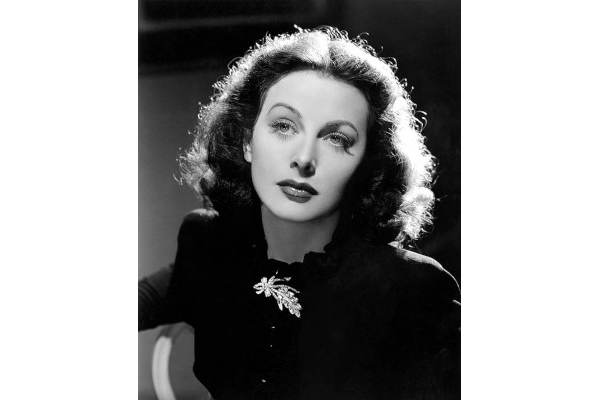
Film actress during Hollywood’s “Golden Age”, inventor, and the co-intervenor of the technology that will be the basis of modern days wireless communication systems.
Born as Hedwig Eva Maria Kiesler in Vienna, Austria-Hungary, the only child to parents of Jewish descent. Her mother converted to Catholicism, and Lamarr was raised as Christian. Her interest in technology started early on in her life. At age 5, she dismantled and reassembled her music box to understand how it works. Her interest in acting also developed from a young age, fascinated by theater and film, she took an acting class, and at 16 years old, she skipped school to work as a script girl at a film production company. Not long after, she got a role as an extra in a film, and at 17 landed her first speaking role.
Afterward, she moved to Berlin, and at 18, she was given the lead role in the controversial and sexually charged film, “Ecstasy”, performing in the nude in some scenes as well as during an orgasm. That same year, Lamarr married Friedrich Mandl – a 33 years old wealthy arms merchant. Mandl was a controlling husband who prevented Lamarr from pursuing her acting career, and after a few years, she fled home, escaping on a bike in the middle of the night.
At 23, Lamarr moved to London, where she met Louis B. Mayer of MGM. She turned down an offer of $125 a week, but booked a ticket to the same ship to America as he did, and managed to secure an offer of a $500 a week. Under the name Hedy Lamarr, Mayer promoted her as the “world’s most beautiful woman”, and in 1938, after the release of the movie “Algiers”, she became a worldwide sensation. Afterward, Lamarr was usually typecast in the roles of the glamorous seductress.
In 1950, Lamarr played the lead in the award-winning film “Samson and Delilah”, although she got critical acclaim for this role, her film career began to decline. In the following years, the movies she appeared in were failing at the box offices, and at the age of 44, she acted for the last time as her 30th movie was filmed.
In addition to her prosperous acting career, Lamarr was a self-taught inventor and had numerous inventions, including an upgraded traffic stoplight and a water-dissolve tablet that creates a soda beverage. During WW2, Lamarr and the composer George Antheil invented a technology for Secret Communications System, changing radio frequencies that prevent the enemies from decoding messages. Although it was granted by the US Patent and Trademark Office, it wasn’t implemented until 1962, when an updated version was designed. That invention is actually the basis of present days wireless communications, such as WiFi, GPS, and Bluetooth. Only in 1997, Lamarr was recognized for this invention, and became the first woman to receive the BULBIE™ Gnass Spirit of Achievement Award – “The Oscars of inventing.” Read more...

