
A novelist, poet, and social activist. The first African-American woman to be awarded the Pulitzer Prize for Fiction.
Alice Malsenior Tallulah-Kate Walker was born in Eatonton, Georgia, the youngest of eight children of sharecroppers. At 8, she was injured in her eye after her brother played with a BB gun, causing her permanent blindness in one eye. The mark on her eye made her an easy target to her classmates, so she turned to poetry for comfort.
Growing up in the segregated south, she attended an only black kids’ high school, from which she graduated valedictorian. Her high scores granted her a full scholarship to Spelman College, where she studied for two years before transferring to Sarah Lawrence College in NYC. In this period, Walker had an abortion which caused her suicidal thoughts. She wrote all about it in her poems.
In 1965, at the age of 21, Walker moved to Jackson, Mississippi, and became active in the civil rights movement. She worked for the Legal Defense Fund of the National Association for the Advancement of Colored People and as a consultant in black history to the Friends of the Children of Mississippi Head Start program while serving as writer-in-residence in various academic institutes publishing essays and short stories. At 23, she married Melvyn Rosenman Leventhal, a Jewish civil rights attorney. At the time, interracial marriage was illegal in the south, and the couple had to travel to NYC to get married. On their return, they became the first legally married interracial couple in Mississippi since 1822, when the miscegenation laws passed. During their nine years of marriage, they suffered recurring harassment from the Ku Klux Klan.
In 1970, at 26, Walker published her first novel, The Third Life of Grange Copeland, following the life of an abusive sharecropper husband and father. Three years later, she was appointed editor of Ms. Magazine, published her second poetry collection and her first collection of short stories. In 1976, Walker returned to NYC and published her second novel Meridian, about several civil rights activists in the south during the 1960s.
In the late 1970s, she moved to California, where she wrote her best-known work, The Color Purple. Published in 1982, the novel explores the struggles of a black woman in the racist and patriarchal society of 1900s Georgia. The book was a best-seller, and in the following year, 39 years old Walker became the first African-American woman to win the Pulitzer Prize for Fiction. Later the novel was adapted into a film featuring Oprah Winfrey and Whoopi Goldberg and a Broadway musical produced by Quincy Jones and Oprah Winfrey.
In 1984, she co-founded the feminist publishing company Wild Tree Press. She deepened the world of some of her characters from The Color Purple in two of her novels, The Temple of My Familiar and Possessing the Secret of Joy, and created new characters that allowed her to delve into other social issues, such as female sexuality in By the Light of My Father’s Smile from 1998, and identity questions in Now Are the Time to Open Your Heart from 2005.
Throughout the decades, Walker published seven novels, ten poetry collections, four short stories collections, four children’s books, and a dozen collections of essays and articles. In all of her work, Walker deals with the struggles of black people, especially women, and their experiences in sexist, racist, and violent surroundings. Often using Black vernacular, which highlights the hundreds of years of slavery and oppression, she had dealt with complex topics such as rape, isolation, bisexuality, and troubled relationships within the black community.
Walker is a long-time social and political activist, promoting and fighting for various causes, from black and women’s rights to environmental issues, Palestinians’ fight for independence, and the elimination of female genital mutilation. Read more...

Pulitzer Prize-winner novelist and journalist, the author of the novel “Gone with the Wind.”
Margaret Munnerlyn Mitchell was born and raised in Atlanta, Georgia. Growing up, she heard stories about the Civil War from relatives and family friends who fought in the war as Confederate soldiers. When Mitchell was able to read on her own, she read everything she could get her hands on. Her favorites author was Thomas Dixon, who wrote about the white south as the victim of the Civil War.
Mitchell loved to write stories from a young age. She began with stories about animals, then fairy tales and adventure, crafting the covers of the books she wrote and adding artwork. At 15, with the encouragement of her English teacher, she wrote her first novella named “Lost Laysen.” The novella was discovered only in 1994, and it became a Best Seller when it was published. After graduating high school, she enrolled in Smith College in Massachusetts, but four months later, her mother died of the Spanish flu, and after finishing freshman year, she returned to Atlanta, taking care of the household, her father, and brothers. She never returned to college.
At the age of 20, she made her society debut. She loved to flirt and was known as a heart breaker, getting engaged five times before marrying Red Kinnard Upshaw. In the four-month they lived together, she suffered emotional and physical abuse as a result of his alcoholism and violent temper. A year after the wedding, they got a divorce. In the need to provide for her own, Mitchell began to write articles for The Atlanta Journal. Her articles dealt with a diverse range of topics, including fashion, celebs interviews, and Confederate generals. Her journalism career was short-lived and less than four years of writing, and two years after she married John Mars, who was the best man at her first wedding, she quit because of an ankle injury. During those four years, she published 129 articles, 85 stories, and numerous book reviews. While restricted to home because of her injury, her husband brought her armloads of books to keep her mind occupied. One day he came with a typewriter suggesting she write a book instead of reading, and for the next three years, Mitchell dedicated her time to write a novel set in the Civil War-era.
At age 36, she was convinced to publish her novel – “Gone with the Wind.” It sold 50,000 copies a day and 1 million within six months, becoming the most selling novel in the US, translated to more than 40 languages, and selling 30 million copies worldwide. A month after its release, Mitchell sold the motion-picture rights for $50,000, at the time it was the highest amount ever paid to a debut novelist. Disliking the fame, she declined requisitions for promotional appearances, preferring to respond to the thousands of fan letters she received. She never wrote another book. On August 11, 1949, on her way to the movies, she was struck by a speeding automobile, and died five days later. Read more...
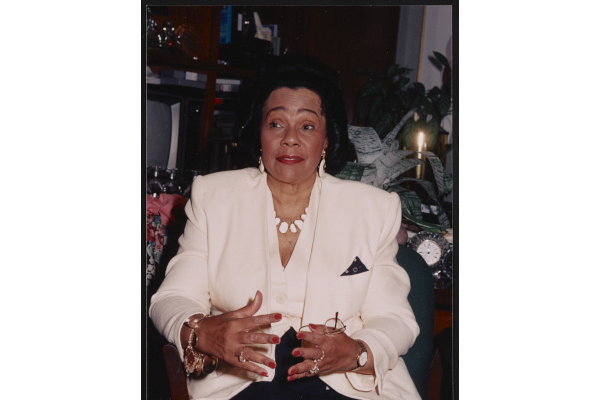
A civil and equal rights leader, women’s rights activist, musician, and the wife of Dr. Martin Luther King, Jr.
Born in Marion, Alabama. From an early age, she developed musical skills, singing in the church and school’s chorus as well as playing the violin, trumpet, and piano. She attended Antioch College in Yellow Springs, Ohio, where she studied music and education. In college, she became active in the Civil Rights Movement, joining several political groups. After earning her bachelor’s degree, she was awarded a fellowship at the New England Conservatory of Music in Boston. In Boston, she met her future husband, Martin Luther King Jr, who studied for Ph.D. at Boston University. She decided to continue her life with him, over her music career, and they got married in a ceremony led by his father in her family house.
The following year, they moved to Montgomery, Alabama, where he served as pastor. Although she focused on raising their four children and taking the tasks of the pastor’s wife, she remained politically active and played a critical role in the civil rights movement on her own. She organized and performed in freedom concerts, participated in the Montgomery Bus Boycott of 1955, accompanied her husband in his journeys around the world, including Ghana and India, and worked tirelessly for the passing of the 1964 Civil Rights Act. She criticized the movement’s exclusion of women and spoke out on all matters regarding civil rights, including religious freedom, health care, racial and economic justice, the needs of the poor and homeless, and same-sex marriage. She served as a delegate in the Women’s Strike for Peace Conference in Geneva, Switzerland, and worked as the mediator for various international peace and justice organizations.
After her husband’s assassination on April 4th, 1968, she channeled her efforts spreading his ideology of nonviolence and equal rights to all. She founded and served as the first president of the Martin Luther King Jr. Center for Nonviolent Social Change, demonstrated against apartheid in South Africa and expressed her views by speaking publicly and publishing in nationally syndicated columns. She led the campaign to establish a US national holiday on January 15th, Dr. King’s birthday.
Throughout the years, she served as head of many US delegations, such as the Coalition of Conscience, the delegation of Women for a Meaningful Summit, and the Soviet-American Women’s Summit. She founded dozens of civil rights organizations, including the Black Leadership Roundtable, the National Black Coalition for Voter Participation, and the Black Leadership Forum.
King died at age 78 due to ovarian cancer complications. More than 14,000 people attended her service; among them were four out of five living US Presidents.
Dive deeper into the inspiring story of Coretta Scott King with our fun and engaging printable worksheet!
Available now on Etsy and Teachers Pay Teachers. Read more...

